The revenue trap: why raising exam fees isn’t the only path to growth




I recently reached a parenting milestone with my toddler: the realization that "simple" projects (like choosing a single Halloween costume) quickly spiral into four different outfits and a lot of extra logistics. As a first-time mom, I’m learning that the "standard" way of doing things isn't always the most efficient.
The same logic applies to the certification industry. As ACMC grows, I’m seeing a recurring theme in my conversations with program leads: the "standard" revenue model is broken, and it's time for a more strategic approach.
“Raising exam fees is a short-term fix for a long-term problem. The real path to sustainable growth is reclaiming your role as the 'source of truth' for your candidates.”
The "exam fee" lever
When a program needs more revenue, the default move is almost always to raise exam fees. That’s a short-term fix for a long-term problem.
Hiking fees creates a barrier to entry for candidates and puts unnecessary pressure on your mission. Fortunately, I’ve spent time recently with a much better alternative for sustainable growth: official, test-program-owned exam prep.
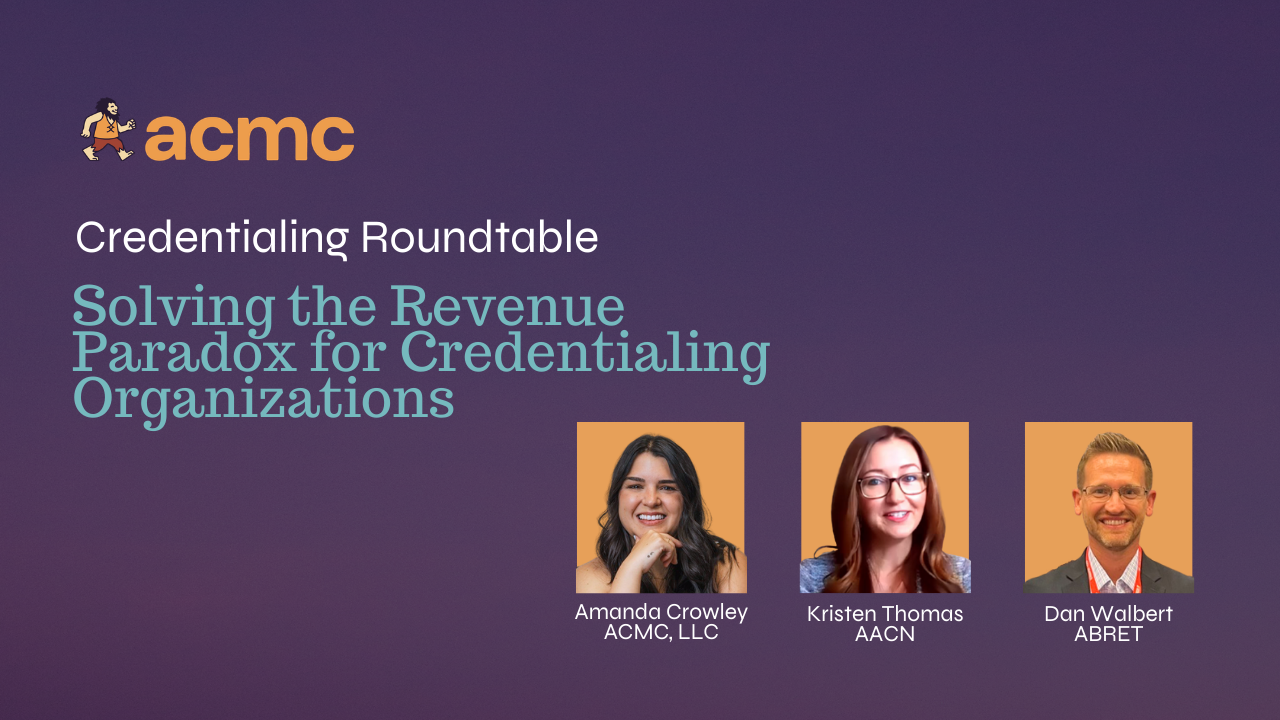
I sat down with Kristen Thomas (American Association Of Critical Care Nurses) and Dan Walbert (ABRET Neurodiagnostic Credentialing & Accreditation) to discuss how they’ve built prep programs that drive meaningful revenue while improving candidate satisfaction. Here are the three strategic shifts you need to know.
1. Reclaiming the "source of truth"
Your candidates are already spending money. They are buying third-party study guides, unofficial question banks, and review courses that may or may not be accurate.
They’d rather buy from you. Candidates trust the official test sponsor. They want materials that align with your specific blueprint and practice items that mirror your exam’s style. When you stay out of the prep game, you aren't "protecting" them; you’re leaving them at the mercy of unofficial resources. Offering quality prep is mission-aligned work that boosts candidate confidence and pass rates.
-
A major blocker for many programs is the fear of accreditation conflicts. However, maintaining a strict, documented firewall between your education and exam delivery functions keeps you in full compliance with I.C.E. and NCCA standards (read more about that here). You can protect exam integrity and provide the "source of truth" at the same time.
2. Overcoming the "resource drain" narrative
The biggest objection I hear to launching an official prep program is bandwidth. Most leads assume it requires a massive, multi-year project that will eat the internal team alive.
It shouldn't. The industry has evolved. Today, the right strategic partners can handle the heavy lifting, from content import to platform hosting, allowing you to launch a sophisticated product without doubling your headcount.
3. The shift to revenue-share partnerships
Legacy providers often demand massive upfront investments: custom development costs, annual platform fees, and "import" charges that kill your ROI before you even launch.
There is a more pragmatic, agency-endorsed model: revenue share partnerships. In this scenario, a partner handles the product development and ongoing management, and you share in the revenue split. Some splits reach the 80% range, making this a low-risk, high-reward move.
Think about it:
Lower risk. * Faster speed to market. * Scalable income stream.
It’s the ultimate blueprint for programs that have been kept on the sidelines by budget constraints.
Ready for the full discussion?
Watch our full 45-minute deep dive with ABRET and AACN. We cover:
How to build the business case for leadership.
Real-world metrics and outcomes from successful launches.
How to choose a partner that protects your margins and your mission.